


Saltwater vs. Chlorine Pools: How to Choose Durable Pool Mosaic Tiles
Salt-chlorinated and traditionally chlorinated pools can both use glass or porcelain mosaic finishes, but buyers should verify the exact tile, decorative surface, mounting method and installation-system compatibility with the project. This B2B guide explains how pool builders, resort buyers, importers and designers can evaluate durability without relying on broad “salt-proof” or “chlorine-proof” marketing claims.
Quick Answer
Saltwater pools with salt-chlorine generators still use chlorine as the disinfectant. Instead of searching for one universally “saltwater-proof” mosaic, identify the exact pool operation and exposure conditions. Compare product-specific glass or porcelain technical data, surface treatments, backing, adhesive, grout, water-chemistry expectations and relevant maintenance requirements before approval.
Saltwater vs. Chlorine Pools: What Is the Difference?
A traditionally chlorinated pool receives chlorine through an operator-selected disinfection system. Many pools described as saltwater pools use a salt-chlorine generator: a device that produces chlorine from salt dissolved in pool water. The finished pool is still a chlorinated water environment.
Salt-electrolytic systems generate chlorine disinfectant onsite. For tile procurement, the relevant questions concern the actual pool environment and what conditions the specified tile will face, rather than treating “saltwater” and “chlorine” as entirely separate categories.
Salt-Chlorinated vs Traditionally Chlorinated Pool Environments
| Factor | Salt-chlorinated pool | Traditionally chlorinated pool |
|---|---|---|
| Disinfection | Chlorine typically generated from dissolved salt | Chlorine provided through a separate dosing system |
| Chloride/salt exposure | Salts remain part of water chemistry | Composition varies; not necessarily free of chloride |
| Finish selection | Check tile and decorative finish against defined water conditions | Check tile and decorative finish against defined water conditions |
| Adjacent materials | Review susceptible metallic components and interfaces | Review components for actual local conditions |
| Installation system | Approved immersion-compatible assembly required | Approved immersion-compatible assembly required |
| Maintenance | Pool operator manages disinfectant, pH and other parameters | Pool operator manages disinfectant, pH and other parameters |
Neither pool description alone proves a particular tile is suitable. Final approval depends on actual project chemistry, exposure and product data.
Water-quality management is the responsibility of trained pool operators; tile suppliers should focus on the product and installation-system conditions documented for the project.
Glass vs. Porcelain Mosaic Tiles in Saltwater and Chlorine Pools
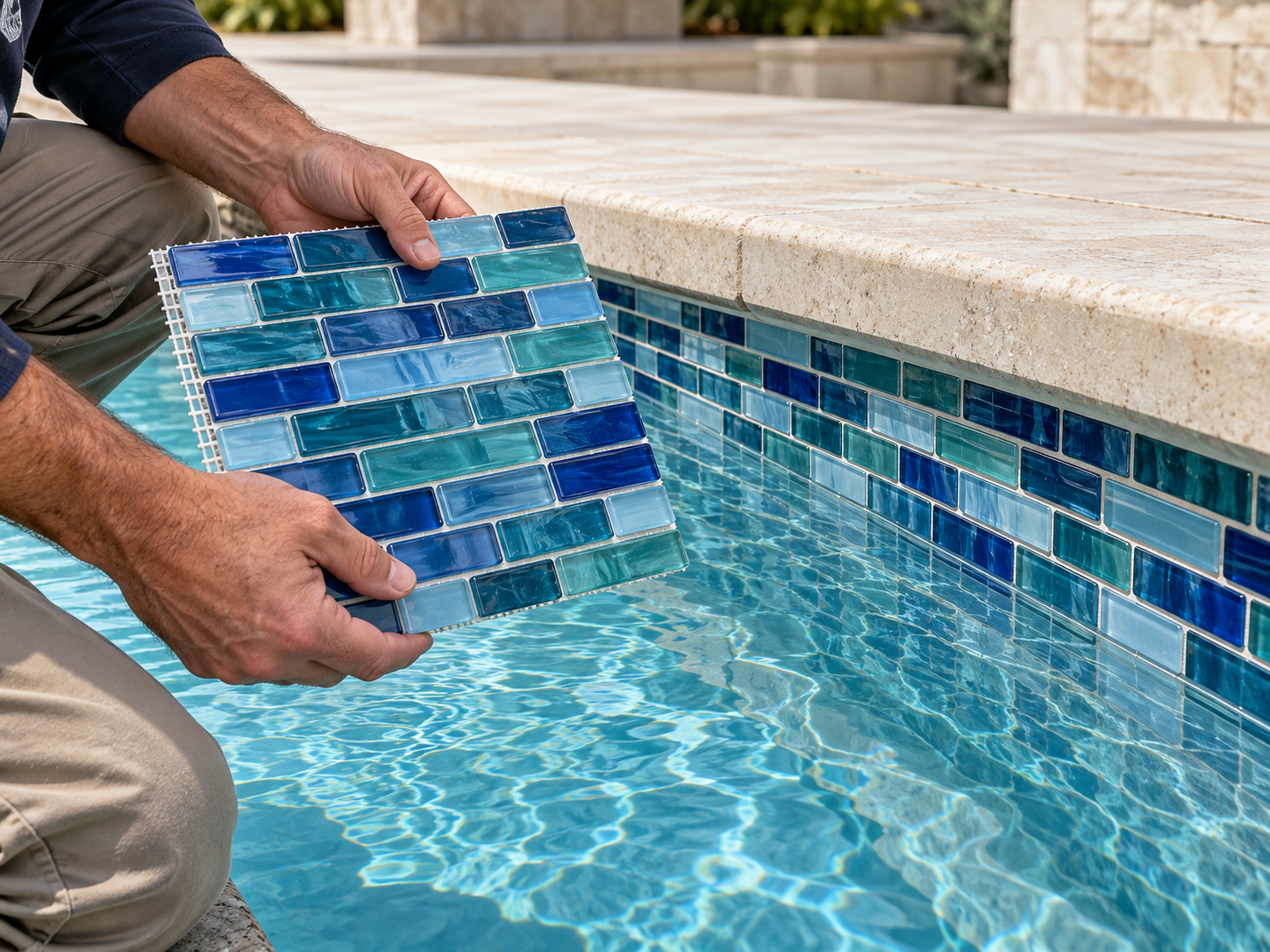
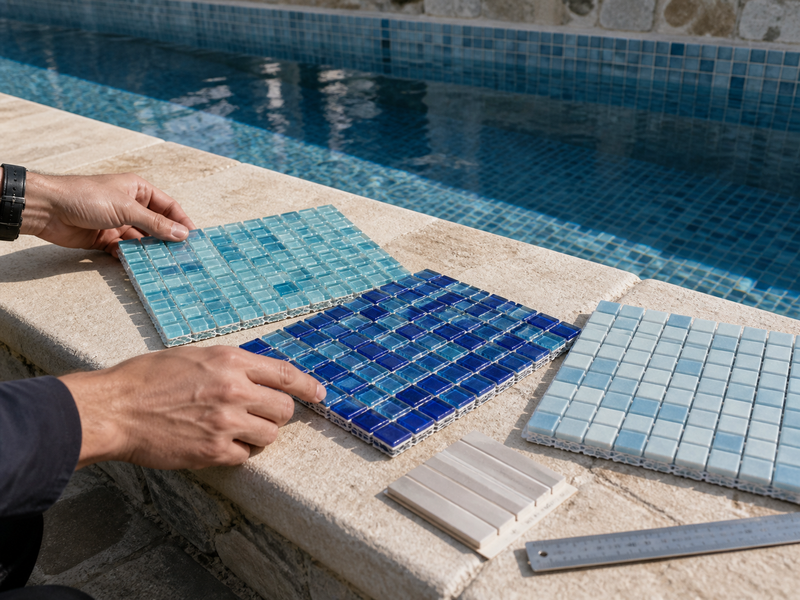
Glass pool mosaic: glass can provide translucency, iridescence and strong color effects. However, buyers must distinguish the underlying glass from inks, coatings, foils, laminates, decorative layers or backing materials. Each component should be reviewed for the intended long-term immersion and cleaning conditions.
Porcelain pool mosaic: porcelain offers different finishes and manufacturing characteristics, but individual glazed or printed surfaces still need to be checked. Technical approval should cover the exact product, not simply the word “porcelain.”
| Procurement question | Glass mosaic | Porcelain mosaic |
|---|---|---|
| Is the material suitable? | Verify exact glass tile and backing for pool use | Verify exact porcelain tile for pool use |
| Is a decorative finish involved? | Check reflective, printed, coated or laminated effects | Check glaze, print or decorative finish |
| What technical records are available? | Request product-specific immersion/chemical suitability documentation | Request applicable water absorption, chemical or other relevant test data |
| What about repeat orders? | Maintain reference SKU, surface and approved sample | Maintain reference SKU, shade and approved sample |
| Where to start browsing? | Glass Pool Mosaic | Porcelain Pool Mosaic |
Neither category should receive an unqualified statement such as “all glass mosaic is chlorine-proof” or “all porcelain is salt-proof.”
Check Decorative Coatings, Printed Patterns and Long-Term Appearance
Material suitability is not only a question of the tile body. Decorative products may contain printed or applied effects that differ in long-term appearance, so buyers should ask whether the exact finish has been evaluated for the intended project.
- Inkjet and printed glass: confirm the applicable surface construction and product-specific water-use guidance.
- Iridescent or metallic effects: distinguish the appearance of the finish from independently verified chemical performance.
- Glazed porcelain: request documentation for the actual glaze or finish where required.
- Color and batch: compare approved reference samples and note the expected variation.
- Sunlight and weather: outdoor exposure may create additional project requirements beyond pool-water immersion.
- Cleaning: confirm approved cleaners and maintenance methods for the chosen finish.
A manufacturer or distributor should be able to identify the model being discussed; a photo of a similar blue mosaic is not a sufficient technical reference.
Tile Is Only One Part of the Pool Installation System
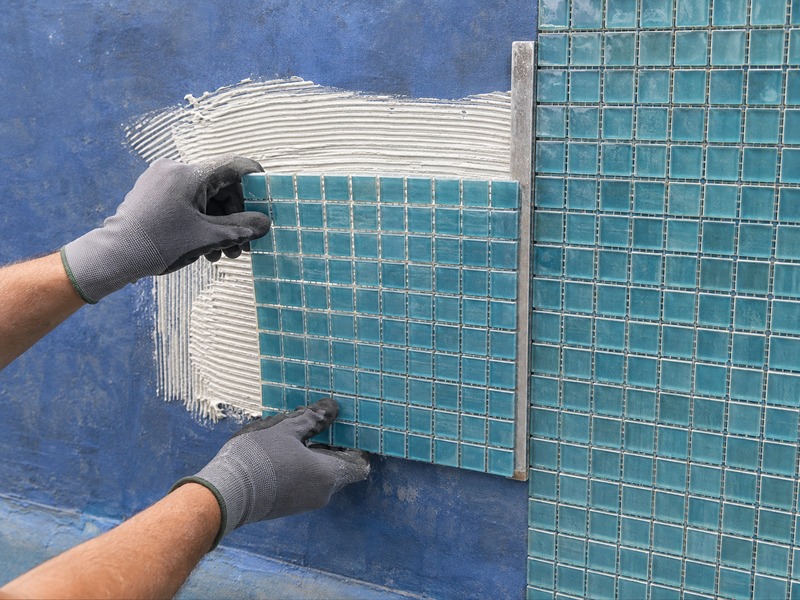
Long-term pool performance depends on the compatibility of substrate, waterproofing, tile, backing, adhesive, grout, sealants and movement joints. A product may be suitable for pool walls while an unrelated backing or setting material is not recommended for continuous immersion.
| System element | What the buyer should confirm |
|---|---|
| Mosaic mounting | Is the exact mesh, dot or face-mounting construction approved for the intended submerged application? |
| Waterproofing | Is the selected waterproofing system intended for the pool structure and exposure? |
| Adhesive | Is it compatible with the tile, waterproofing, mounting and immersion environment? |
| Grout | Does it meet specified pool-water and maintenance requirements? |
| Movement joints | Are required flexible joints and details accounted for? |
| Commissioning | Are required cure periods and start-up inspection included in the project schedule? |
For further installation principles, see the Swimming Pool Mosaic Installation Guide.
What Test Reports and Technical Documents Should Pool Buyers Request?
Documentation should be tied to the exact product and intended use. A generic factory certificate does not replace a product-specific technical assessment.
| Document or evidence | Why it matters |
|---|---|
| Exact item specification | Identifies SKU, material, finish, chip size, sheet and mounting |
| Written intended-use confirmation | Helps establish whether the selected item is appropriate for the defined pool zone |
| Relevant chemical-resistance documentation | Supports the review of the tile surface against specified exposure conditions |
| Water absorption data where applicable | Relevant to some ceramic/porcelain specification decisions |
| Applicable frost/thermal data where required | May matter in outdoor or freeze-thaw climates |
| Mounting and installation guidance | Confirms compatibility with the full pool assembly |
| Approved reference sample | Supports appearance, batch and repeat-order comparison |
| Care and maintenance guidance | Avoids unsuitable cleaners or unsupported maintenance assumptions |
| Third-party report identification | Lets the buyer confirm test method, model, date and laboratory |
Not all tests apply to every material or market. Request the exact standards required in the project specification rather than treating this as a mandatory universal certificate list.
If a report is shared, verify that the tested model, finish, lot or representative construction matches what you plan to purchase.
Saltwater and Chlorine Pool Tile Selection by Buyer Type
- Pool builders and contractors: coordinate tile data with the approved waterproofing, adhesive, grout and commissioning plan.
- Hotel and resort procurement teams: review maintenance practices, outdoor exposure, finish replacement and project-wide consistency.
- Architects and pool consultants: connect performance requirements to the exact zone and technical specification.
- Importers and distributors: avoid advertising blanket chemical-resistance claims without matching model-specific support.
- Coastal projects: evaluate additional environmental exposures and adjacent metal details separately from pool-water suitability.
Step-by-Step Buying Process for Salt-Chlorinated or Chlorinated Pools
- Define the system: identify pool type, disinfection method, temperature range and intended operation.
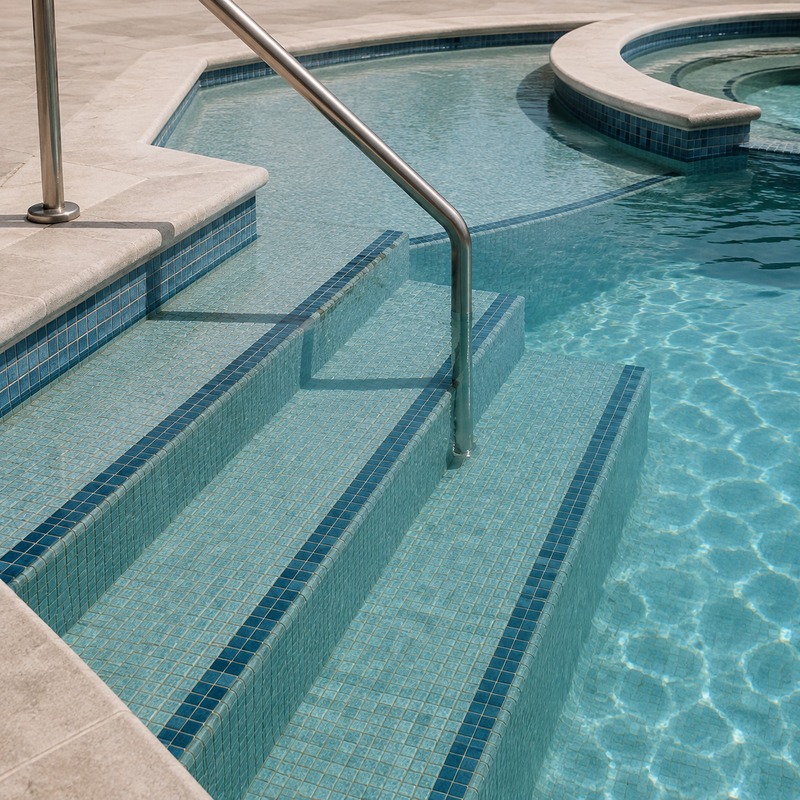
- Map the surface: distinguish wall, floor, waterline, spa and step locations.
- Shortlist material and finish: compare actual glass and porcelain items, not only material families.
- Request product documentation: ask for intended-use confirmation and applicable test data.
- Review the complete assembly: verify mounting, waterproofing, adhesive, grout and movement joints.
- Examine physical samples: review color, finish and joint appearance under project-relevant conditions.
- Record the approved reference: model, finish, mounting, packing, quantity and destination.
- Plan spares: reserve original-batch sheets where replacement color matching matters.
Illustrative Case: Salt-Chlorinated Resort Pool Mosaic Procurement
This case is illustrative. It is not a claimed Ralart customer installation or a laboratory test result.
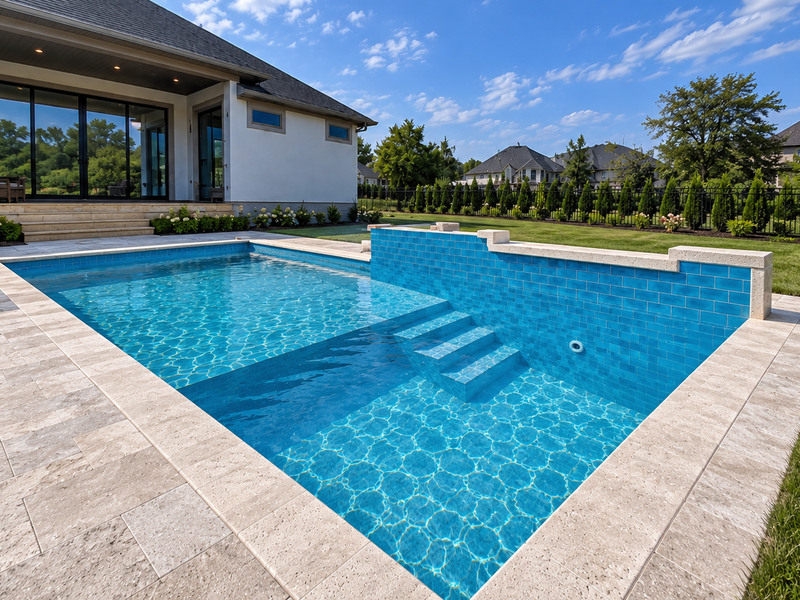
A beachfront resort plans a salt-chlorinated outdoor pool with aqua-blue feature walls, a decorative waterline and a small spa. The buyer initially asks for “saltwater-proof glass mosaic” without specifying an item.
- The supplier requests the water-treatment description, expected site exposure and exact installation zones.
- The project team shortlists specific glass mosaic finishes and porcelain alternatives.
- The buyer requests relevant documentation for the exact shortlisted products and finishes.
- The installer confirms each mosaic mounting system and compatible setting/grouting assembly.
- The design team reviews physical samples under daylight with proposed grout and coping.
- The procurement schedule records approved SKUs, quantities, spare stock and packaging labels.
Buyer takeaway: a verifiable product specification is more useful than an unsupported “salt-proof” claim.
Request Pool Mosaic Technical Information
Share the pool type, water treatment method, wall/floor/waterline zones, preferred glass or porcelain style, destination, quantity and project standards. Ralart can review matching product options and available model-specific documentation.
Ask for Pool Mosaic SpecificationsFrequently Asked Questions
1. Do saltwater pools contain chlorine?
Yes. Most salt-chlorinated pools use a salt-chlorine generator to make chlorine from dissolved salt; they are still chlorine-disinfected pools.
2. Can glass mosaic tiles be used in saltwater pools?
Some pool-rated glass mosaics may be suitable, but the exact tile, decorative finish, backing and installation system should be approved for the intended conditions.
3. Are all glass pool mosaics chlorine-resistant?
No blanket claim should be made for every glass mosaic or decorative layer. Request product-specific suitability information and applicable technical documentation.
4. Is porcelain better than glass for saltwater pools?
Not automatically. Compare the specific porcelain and glass products, finishes, installation requirements and available evidence for the pool project.
5. Does saltwater automatically damage mosaic tiles?
Saltwater exposure alone does not establish how a specific mosaic will perform. Chemical conditions, tile construction, decorative treatments, adjacent components and maintenance all matter.
6. Can a chlorine pool use decorative or iridescent glass mosaic?
Potentially, if the exact decorative mosaic and complete installation system are approved for the defined pool use. Do not infer suitability from appearance alone.
7. What technical documents should I request before ordering?
Request the exact item specification, intended-use confirmation, applicable product test data, mounting guidance, installation compatibility information and care instructions.
8. Does mosaic mounting matter in a saltwater pool?
Yes. Mesh, dot or other backing constructions and their adhesives must be confirmed as compatible with the selected pool installation system.
9. Should I use a special grout for a salt-chlorinated pool?
Use grout specified for the actual pool chemistry, mosaic material, joint width and approved setting system; ask the project installer and material manufacturer to confirm compatibility.
10. Do R11 and R12 ratings prove chemical resistance?
No. R classifications relate to slip testing under defined conditions, not the chemical resistance of tile surfaces.
11. How do I compare two suppliers claiming chemical resistance?
Request reports or written intended-use evidence tied to each exact product, test method, finish and anticipated project exposure rather than relying on a broad claim.
12. What information should I send for a saltwater pool mosaic quote?
Send the pool zone, disinfection system, reference design, item or material preference, project standards, quantity, destination and planned schedule.