Coco tiles are quickly becoming a popular choice for eco-conscious design enthusiasts. Made from natural coconut materials, these tiles combine sustainability with style. In this article, we'll explore what coco tiles are, how they’re created, and the benefits they offer for both residential and commercial spaces.
Coco tiles are an attractive and functional surfacing solution made primarily from coconut shells, coir fibers, and other sustainable materials. These tiles have gained popularity due to their eco-friendly composition and the increasing demand for natural, renewable resources in interior design. They are a perfect option for those seeking a combination of natural beauty and sustainable living.
Coco tiles are crafted from natural byproducts of the coconut, mainly coconut shells and coir fibers, which are both durable and aesthetically appealing. These tiles are available in various forms, including small chips, panels, and textured surfaces, offering versatility for many interior applications. Whether used for walls, floors, or other decorative uses, coco tiles provide a rustic and organic aesthetic that blends seamlessly with modern and traditional interiors.
The materials used in coco tiles are essential to their sustainability and appeal:
● Coconut Shells: The outer hard shell of coconuts is processed into chips or panels, providing the foundational material for the tiles. These shells are typically discarded as waste, but by reusing them, coco tiles contribute to reducing waste and pollution.
● Coir Fiber: The fibrous husk inside the coconut is used to add texture and strength to the tiles. Coir fiber provides a natural, resilient surface and enhances the tactile qualities of the tiles.
● Eco-Friendly Resins and Binders: To bind the coconut materials together, low-VOC resins are used, which ensures the tiles are durable while also maintaining indoor air quality.
● Sustainable Backing Materials: In some cases, coco tiles may feature a backing made from FSC-certified wood or other sustainable resources to improve the structural integrity of the tiles.
The production of coco tiles involves several meticulous steps to transform raw coconut materials into durable and aesthetically pleasing tiles. The coconut shells and fibers are first cleaned and processed before being mixed with eco-friendly resins. The resulting mixture is then pressed into molds to form tiles in various sizes and shapes. After curing, the tiles are treated with a protective coating to enhance their durability and visual appeal.
There are primarily two types of coco tiles, each offering unique characteristics:
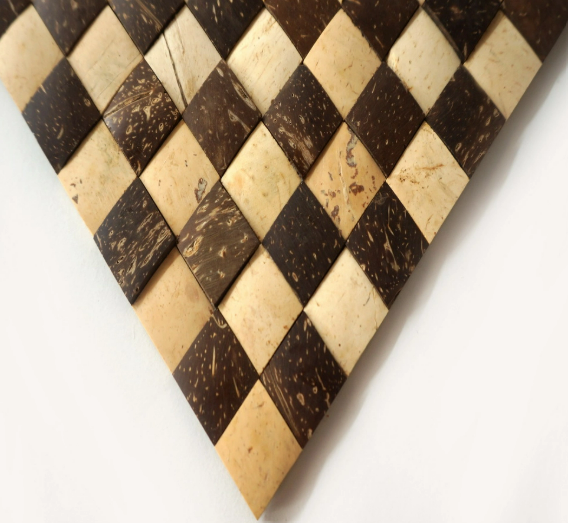
● Coconut Shell-Based Tiles: These tiles are handcrafted from coconut shells, which are cut into chips and assembled by hand. These tiles are known for their rustic, artisanal appearance and are often used in both residential and commercial spaces for their unique texture and organic feel.
● Ceramic or Porcelain Tiles Inspired by Coco: Some tiles are designed to replicate the texture and patterns found in coconut shells. These tiles use traditional materials like ceramic or porcelain and are often decorated with coastal or organic motifs to bring the look of coconut to a more traditional surface.
Coco tiles offer several advantages, making them a highly attractive choice for sustainable interior design. These tiles combine the benefits of eco-friendliness, durability, and aesthetic appeal, making them ideal for a wide range of applications.
Coco tiles are an excellent sustainable choice because they make use of natural, renewable materials such as coconut shells and coir fibers. These materials would otherwise be discarded as waste, but by repurposing them, coco tiles help reduce landfill waste and minimize the environmental footprint of traditional tile production. This eco-conscious approach makes them a perfect option for green building projects and those seeking to reduce their carbon footprint.
One of the standout features of coco tiles is their unique, organic aesthetic. Each tile has a distinctive appearance due to the natural variations in the coconut shells and fibers. This gives coco tiles a one-of-a-kind look that can't be replicated by synthetic materials. Their warm, rustic charm enhances the atmosphere of any room and can complement both modern and traditional interior styles.
Despite being made from natural materials, coco tiles are surprisingly strong and durable. The combination of coconut shells and coir fibers gives them resilience against wear and tear. In addition to their strength, many coco tiles are water-resistant, making them suitable for areas like kitchens and bathrooms where moisture exposure is common.
Coco tiles are highly versatile and can be used in a wide range of interior design settings. Some common applications include:
● Wall Cladding: Coco tiles can add texture and a natural aesthetic to interior walls. They are often used for accent walls or feature walls to create a unique focal point in a room.
● Flooring: While less common than traditional tile options, coco tiles can be used as durable, sustainable flooring for eco-conscious spaces.
● Furniture Accents: Some designers use coco tiles in furniture pieces, adding an organic and nature-inspired element to tables, cabinets, and shelves.
● Decorative Elements: Coco tiles can be cut and arranged in mosaics or other creative designs, offering endless opportunities for artistic expression.
Coco tiles are suitable for a variety of environments, from residential homes to commercial spaces. Their versatility makes them an excellent choice for projects that aim to combine aesthetics with sustainability.
Coco tiles are an ideal choice for homeowners looking to introduce a natural, earthy feel into their living spaces. Their unique appearance adds warmth and texture, making them perfect for areas such as living rooms, kitchens, and bathrooms. In eco-friendly homes, coco tiles are a great way to contribute to a sustainable lifestyle while enhancing the overall aesthetic of the space.
For businesses like hotels, restaurants, and retail stores, coco tiles are an attractive way to incorporate sustainability into their interior design. Coco tiles create an eye-catching ambiance and align with the growing demand for environmentally responsible choices in commercial spaces. Whether used for feature walls or flooring, coco tiles help businesses project an eco-conscious image to their customers.
Coco tiles are a fantastic option for green building initiatives and sustainable design projects. Whether you’re working on a LEED-certified home or aiming to reduce your carbon footprint, coco tiles support sustainable development by utilizing renewable resources and reducing waste. Their unique composition makes them a valuable addition to any eco-friendly project.
Installing coco tiles can require more attention to detail compared to traditional materials, but with proper preparation and correct installation methods, they can enhance any interior space. Proper installation ensures the tiles’ longevity and aesthetic appeal. Below are a few key points to consider for a successful installation.
Before installing coco tiles, ensure the surface is thoroughly prepared. It must be clean, dry, and smooth to provide optimal adhesion for the tiles. Any dust, dirt, or moisture on the surface can interfere with the adhesive's effectiveness. Depending on the type and size of the tiles, you may need specific adhesives or special installation techniques to ensure that the tiles stay in place and perform well over time. Pre-installation preparation will help achieve a flawless finish and prevent future issues.
Although installing coco tiles as a DIY project is possible, it is recommended to hire professionals with experience working with natural materials. Professionals can ensure the tiles are installed correctly, preventing issues like improper alignment or moisture damage. Additionally, they will apply moisture-resistant treatments that help prolong the life of the tiles, particularly in high-humidity areas such as kitchens or bathrooms. Professional installation guarantees the best results, ensuring that your tiles perform as expected while retaining their beauty.
Coco tiles are relatively low-maintenance, but regular care is essential to maintain their appearance. Routine cleaning with a soft cloth and non-abrasive cleaners will help preserve their integrity. Harsh chemicals or scrubbing tools should be avoided to prevent scratching or damage. For areas with high foot traffic or exposure to moisture, applying a protective sealant is advisable to ensure the tiles remain resistant to stains, wear, and moisture. Proper maintenance will ensure that coco tiles retain their aesthetic appeal and longevity over time.
Maintenance Task | Frequency | Recommended Action |
Routine Cleaning | Weekly or Biweekly | Use soft cloth and non-abrasive cleaners |
Protective Sealant | Every 6-12 months | Apply sealant for moisture resistance |
Avoid Harsh Cleaning Tools | As needed | Prevent scratches and surface damage |
When selecting coco tiles for your design project, it’s important to take a few factors into account to ensure they’re the right choice for your space. Consider the environmental conditions, cost, and how well the tiles will match your overall design preferences.
Coco tiles are best suited for indoor applications due to their sensitivity to environmental conditions. They can be damaged by exposure to extreme temperatures, direct sunlight, or high humidity. To preserve their appearance and performance, install them in areas with controlled climate conditions, such as living rooms, kitchens, and bathrooms that are not exposed to the elements. Proper placement will help ensure the tiles maintain their integrity and continue to enhance your space for years to come.
Environmental Factor | Ideal Condition | Considerations |
Temperature | Stable indoor environment | Avoid direct sunlight or extreme temperatures |
Humidity | Controlled indoor environment | Not recommended for areas with constant humidity |
Direct Sunlight | Indirect or filtered light | Exposure may lead to fading over time |
When compared to high-end flooring options like natural stone or hardwood, coco tiles can be more affordable. However, they might still be more expensive than standard ceramic or vinyl tiles. When assessing the cost, it’s important to consider not only the initial price but also the long-term sustainability benefits. Coco tiles’ eco-friendly production and durability often result in fewer replacements over time, making them a cost-effective option for environmentally conscious consumers. Evaluating both the upfront cost and long-term benefits can help you determine if coco tiles fit your project’s budget.
Coco tiles come in a range of finishes, textures, and designs, making them highly adaptable to various design styles. Whether you’re aiming for a rustic, coastal, or contemporary aesthetic, there’s a coco tile that complements your vision. Their unique, natural look adds warmth and texture, enhancing any interior. Take time to choose the style that fits best with your overall design theme. Whether you're creating a calm, earthy vibe or a modern, sophisticated space, coco tiles can seamlessly integrate into your design while providing a natural touch.
Coco tiles offer a sustainable and stylish solution for those seeking eco-friendly design options. Made from natural coconut materials, they provide durability, unique aesthetics, and environmental benefits. These tiles are perfect for both residential and commercial spaces, offering a lasting alternative to traditional materials. Foshan Ralart Mosaic Co., Ltd. offers high-quality coco tiles that deliver both sustainability and elegance, helping to elevate your design while supporting a greener future.
A: Coco tiles are primarily made from natural coconut materials, such as coconut shells and coir fibers, combined with eco-friendly resins. These sustainable materials create durable and stylish tiles suitable for various design applications.
A: Coco tiles are commonly used in sustainable architecture for their eco-friendly properties. They help reduce environmental waste, making them an ideal choice for green building projects and eco-conscious designs.
A: Unlike ceramic tiles, coco tiles are made from natural coconut materials, offering a more organic, rustic appearance. Coco tiles are eco-friendly, lightweight, and offer superior durability compared to traditional ceramic options.
A: Coco tiles provide a unique aesthetic and are highly durable, water-resistant, and sustainable. Their natural beauty and eco-friendly properties make them a great choice for residential spaces, especially for environmentally conscious homeowners.
A: Yes, coco tiles are water-resistant, making them a great option for humid areas like bathrooms and kitchens. They offer both functionality and a unique design, combining natural beauty with practicality.

 English